During a recent conversation with a department head after a leadership workshop, I noticed something unusual. He wasn’t concerned about resignations because there hadn’t been any. Deadlines were being met, attendance was steady, and performance reports still looked healthy. Yet, as we talked, he leaned back and said, “Have you ever looked at a successful team and felt like something was slowly disappearing?”
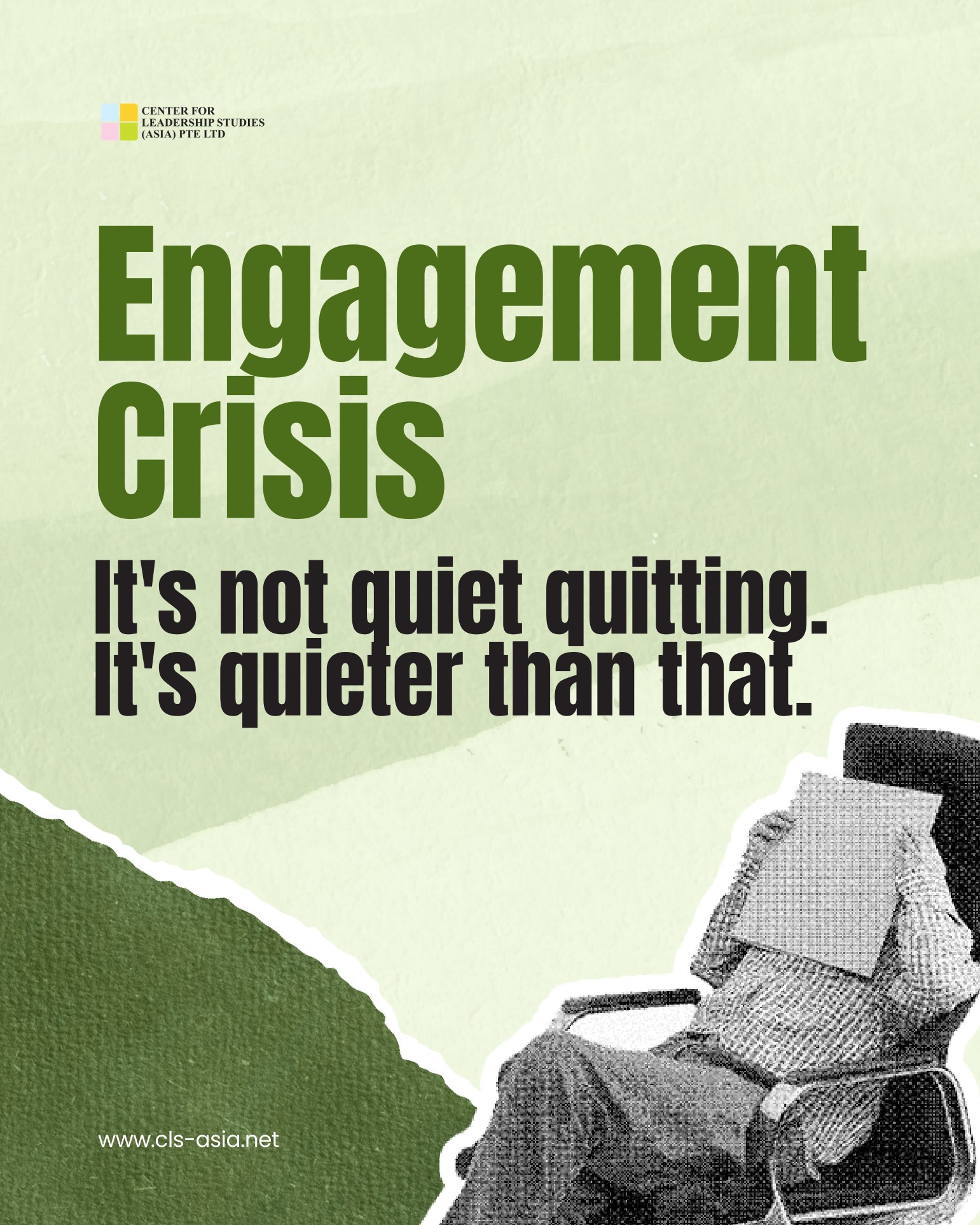
I asked him what had changed. He paused before answering, “They don’t challenge me anymore.” That single sentence opened a much deeper conversation. What he was describing wasn’t simply quiet quitting. It was a quieter form of employee disengagement, one that can remain hidden behind good performance until it begins to affect innovation, trust, and ownership.
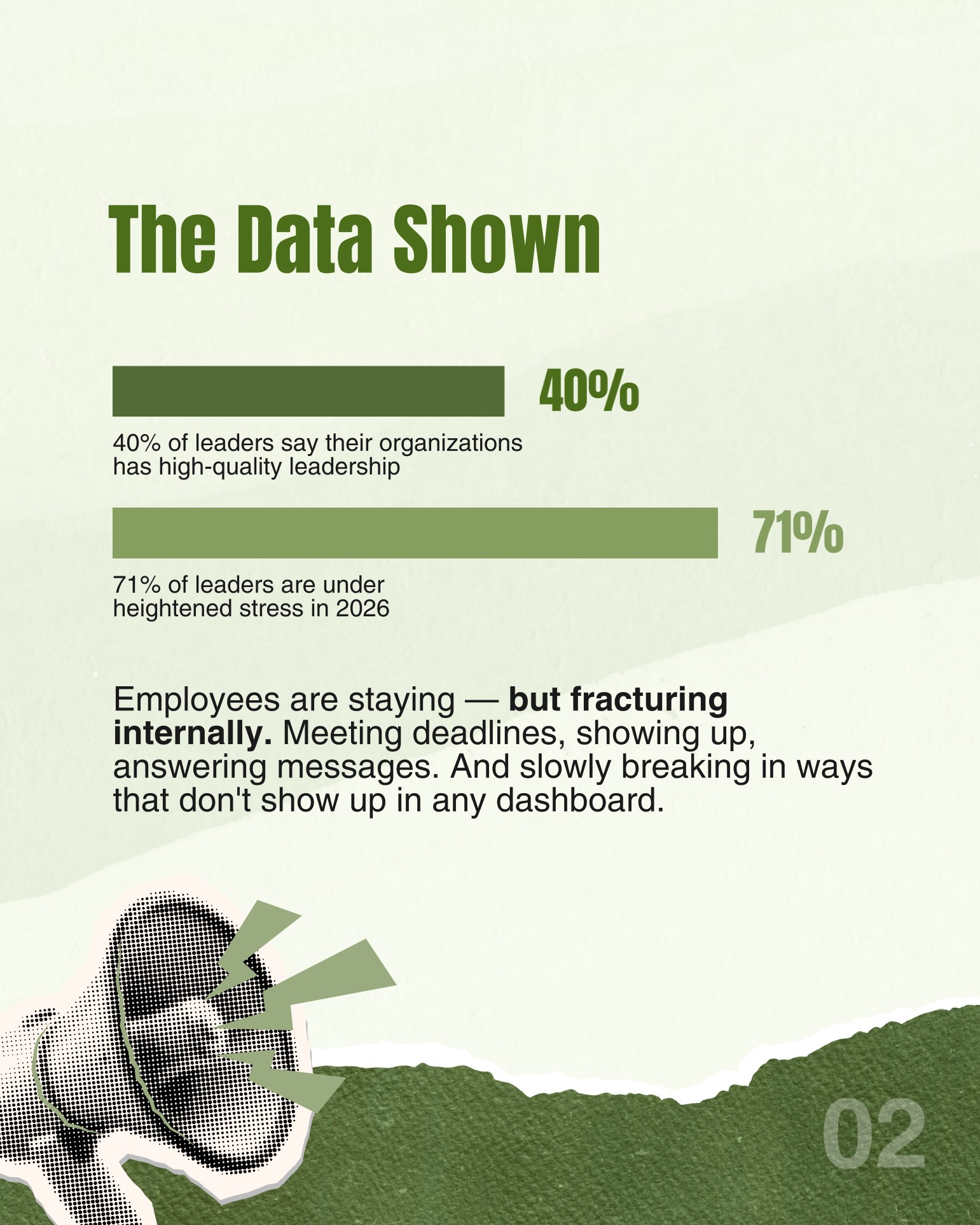
Why this matters: the warning signs leaders don’t always see
Start with two findings that explain the pressure underneath. In DDI’s Global Leadership Forecast 2025, only 40% of leaders rated the quality of leadership in their organization as high, and 71% reported a significant increase in stress since stepping into their current role. Many leaders are stretched thin as they try to determine whether they have the right support and the right people around them.
In his team, that pressure showed up quietly. People were still meeting deadlines, showing up, and answering messages, but they were becoming less involved in the work. That is the difference between employee engagement – being genuinely involved and enthusiastic, and simply being present. Gallup’s latest State of the Global Workplace 2026 report found that only 18% of employees in East Asia were engaged in 2025, compared with 20% globally. For leaders in Hong Kong and across Asia, the message is clear: a team can appear productive on the surface while employee disengagement quietly takes hold beneath the surface.
And this is why it can be so difficult to notice. Quiet quitting was easy to recognize because people were clearly limiting their effort to what their job required. But what happens next can be much quieter. The work still gets done, the numbers still look fine, and nothing immediately raises an alarm. What slowly disappears is the enthusiasm behind the work, the ideas, initiative, and extra effort that once came naturally. The person is still there, but the commitment is gradually fading.
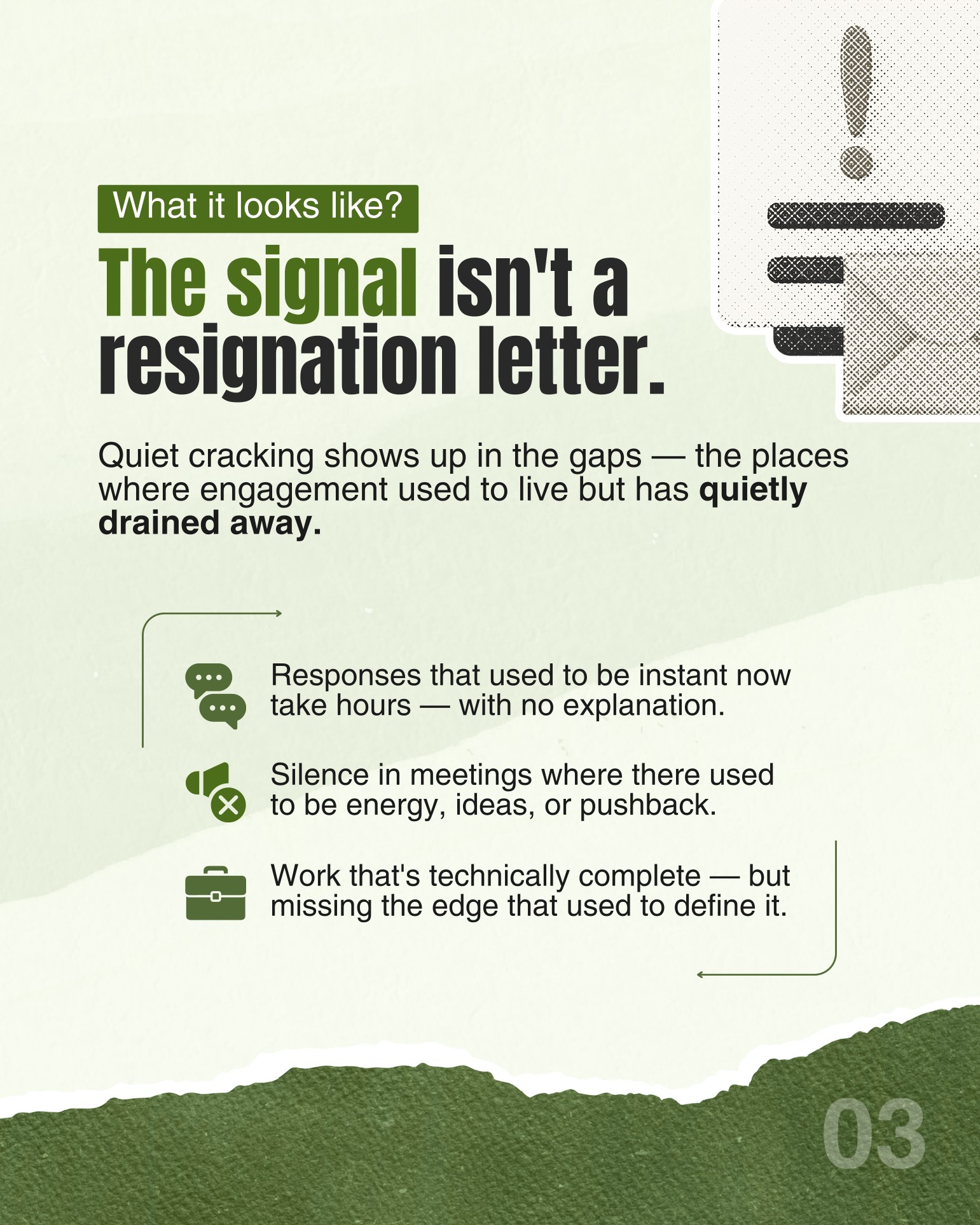
What it looks like: the signal isn’t a resignation letter
As we continued talking, the department head began to remember small changes he had noticed but never thought much about.
People were still doing their jobs. Nothing was obviously wrong. But the team no longer felt the same.
People were still doing their jobs, but the team no longer felt the same. Messages took longer to receive a response. Meetings became quieter, with fewer questions, ideas, and disagreements. He had mistaken the silence for alignment.
Even the work had changed. It was still complete and accurate, but the extra thought was missing, the better idea, the added detail, or the question, “Could we do this differently?”
None of these signs alone indicates that something is wrong, but when they appear together, they are a clear indicator that employee engagement is at risk.
Sometimes, employee disengagement does not begin with a complaint or a resignation.
It simply gets quieter.
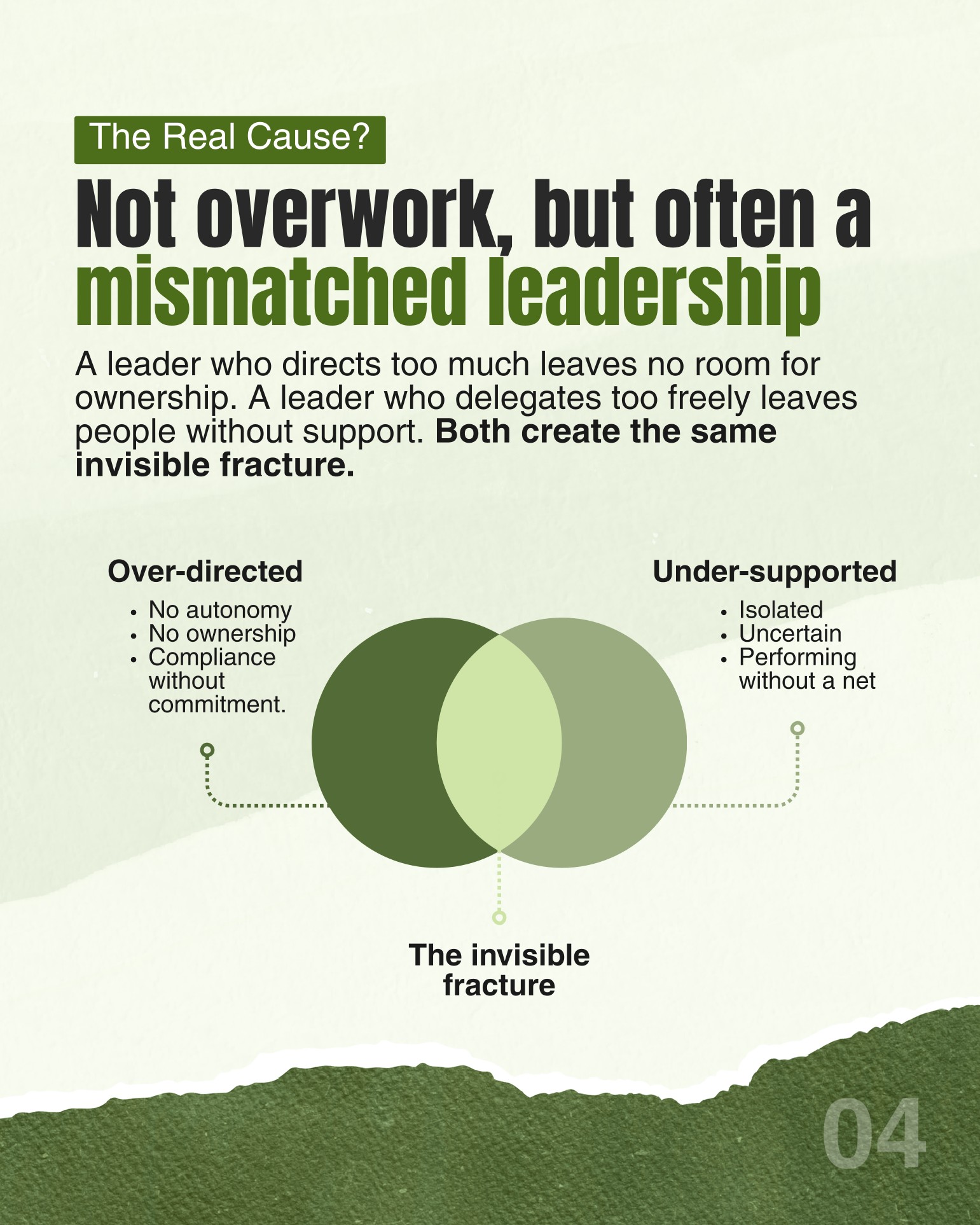
The real cause: It is not overwork, but mismatched leadership
It is easy to blame workload. But sometimes the real issue is simpler: the way someone is being led no longer matches what they need.
A leader who gives too much direction can leave little room for ownership. A leader who gives too much freedom can leave someone without the support they need. One feels controlled; the other feels left alone. In both cases, the result can be the same: a capable employee who gradually stops bringing their full energy to the work.
This is where the Situational Leadership® Model becomes relevant. Developed by Dr. Paul Hersey, the model asks leaders to first understand a person’s Performance Readiness® for a specific task – their ability, confidence, and motivation – before choosing the appropriate leadership approach. The goal is simple: lead people according to their needs, not according to a single fixed style.
Why the crack is even quieter across Asia
This can be harder to spot in some Asian workplaces, including Hong Kong and the wider region. When hierarchy and harmony are important, employees may be less likely to openly challenge a senior leader or speak up when something isn’t working.
Instead, the change may appear in their behavior: fewer questions, less initiative, and a quiet withdrawal from discussions.
That is why leaders need to look beyond what employees say and pay attention to what is changing. The right response depends on the person, the situation, and the team, not a single approach that works for everyone.
You can’t wait for the fracture to show: read the signals before they break
The instinct, once a leader senses a problem, is to wait for proof: the missed deadline, the bad quarter, the resignation. By then the crack has become a break, and breaks are far more expensive to repair than cracks. You can’t wait for the fracture to show; you have to read the signals before they break.
Reading them is a discipline, not a personality trait, and it is learnable. Managers who genuinely improve team engagement tend to do a few unglamorous things consistently:
- ·Diagnose before prescribing. Before adding oversight or backing off, ask what this person actually needs right now: more direction or more support? Match the response to their readiness, not to your habit.
- Treat silence as data. When pushback disappears, get curious rather than comfortable. Ask the questions the quiet is hiding.
- Have the conversation the survey can’t. An annual engagement score arrives once a year; disengagement moves week to week. The real instrument is the manager’s attention.
- Resist the pressure reflex. Meeting withdrawal with more monitoring accelerates the very fracture you are trying to close.
Done consistently, these turn a manager from the person a fracture forms under into the reason it never does.
What it costs and what it’s worth
Employee disengagement can be costly, but its effects are not always easy to measure. It can show up as slower decision-making, fewer ideas, problems raised too late, and, eventually, the loss of people you thought were still engaged.
Addressing it is not a one-time fix. It requires building leadership capability that fits your organization, whether through in-person, virtual, blended, or online development. The right approach depends on your leaders, teams, and specific needs, so the best place to start is by understanding where the engagement gaps are and what your people need from their leaders.
The leadership response starts before people leave
If the quiet in your organization is starting to sound less like calm and more like caution, that is the moment to act before your best people finish the exit interview in their heads. The Center for Leadership Studies (Asia) helps organizations across the region turn managers into the reason people stay and do their best work.
To learn how its leadership development and Situational Leadership® programs can build more effective leaders and higher-performing teams, reach out to the Center for Leadership Studies (Asia) to learn how our development programs can revitalize employee engagement across your teams.
Interested in joining the upcoming public workshop in Singapore/ Hong Kong or organizing a private in-company workshop in the region, visit cls-asia.net or speak with the team on WhatsApp at +65 9134 8448.