“We have a problem with the client deliverable. I don’t think we can meet tomorrow’s deadline.”
Daniel stared at the message for a few seconds.
He had been managing the department for almost two years. His team was experienced, and they had handled demanding projects and tight deadlines before. There had been challenges along the way, but the team generally knew what they were doing.
That was why the message caught him off guard.
The deadline was the next day. The client was important, and Daniel expected the team to raise major concerns before things reached this point.
His first reaction was frustration. He wondered why he was only hearing about the problem now.
But the more important issue was not the missed deadline. It was what happened after Daniel responded.
When a manager reacts to bad news, employees are learning more than how that particular problem will be handled. They are also learning whether it is safe to bring difficult information forward the next time.
That is where a culture of trust and openness begins.
It is not created by a culture workshop, a statement about company values, or an annual employee engagement program. It is built through everyday interactions between leaders and their teams.
Psychological Safety Is About What Happens When People Speak Up
Psychological safety is often discussed as if it means creating a comfortable workplace where everyone feels free to express themselves.
That is only part of the picture.
In practice, it is closely connected to whether employees feel able to speak honestly about problems, ask questions, admit when they are stuck, challenge an idea, or acknowledge a mistake without expecting to be embarrassed or punished.
This matters because employees are constantly observing how leaders respond.
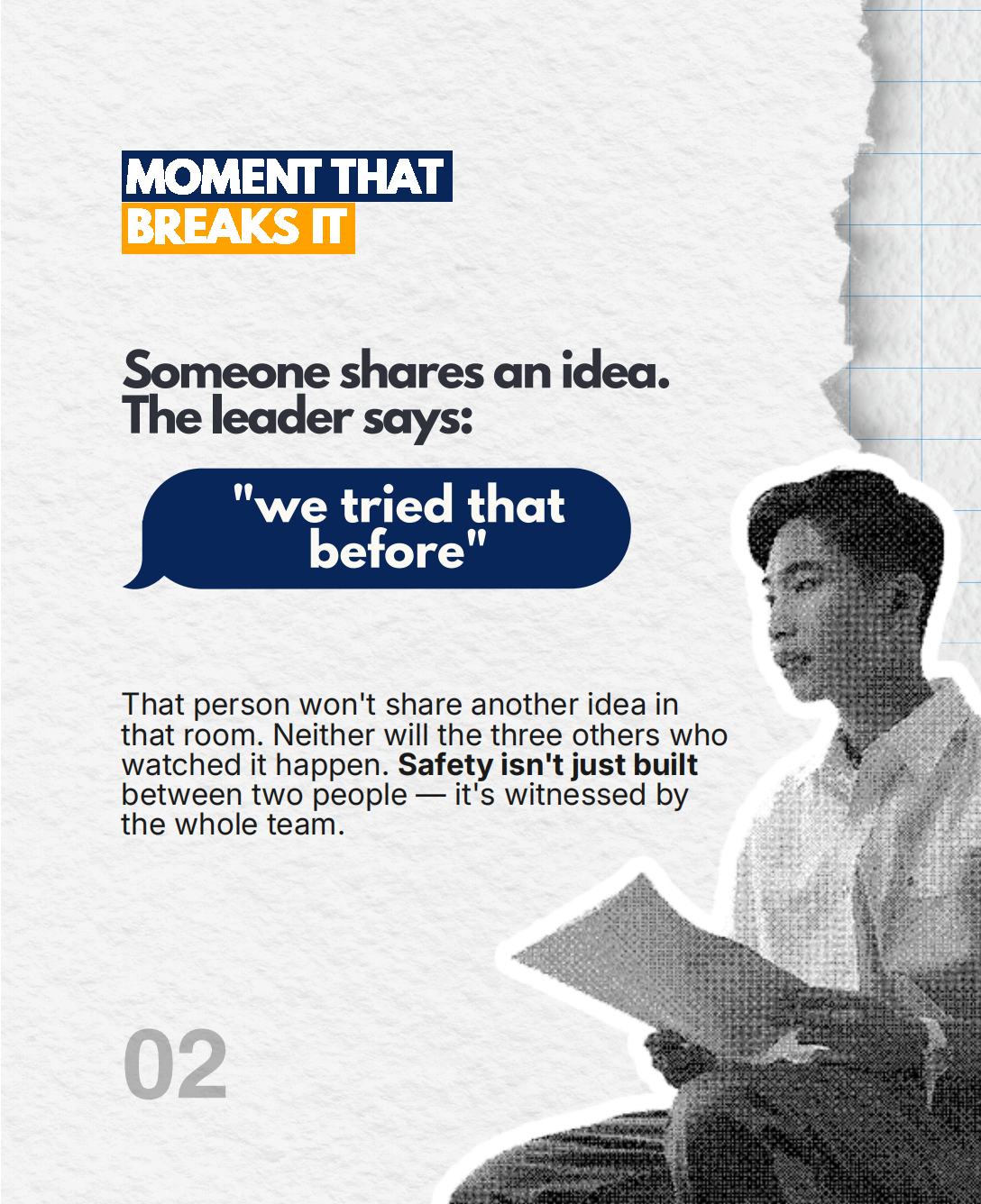
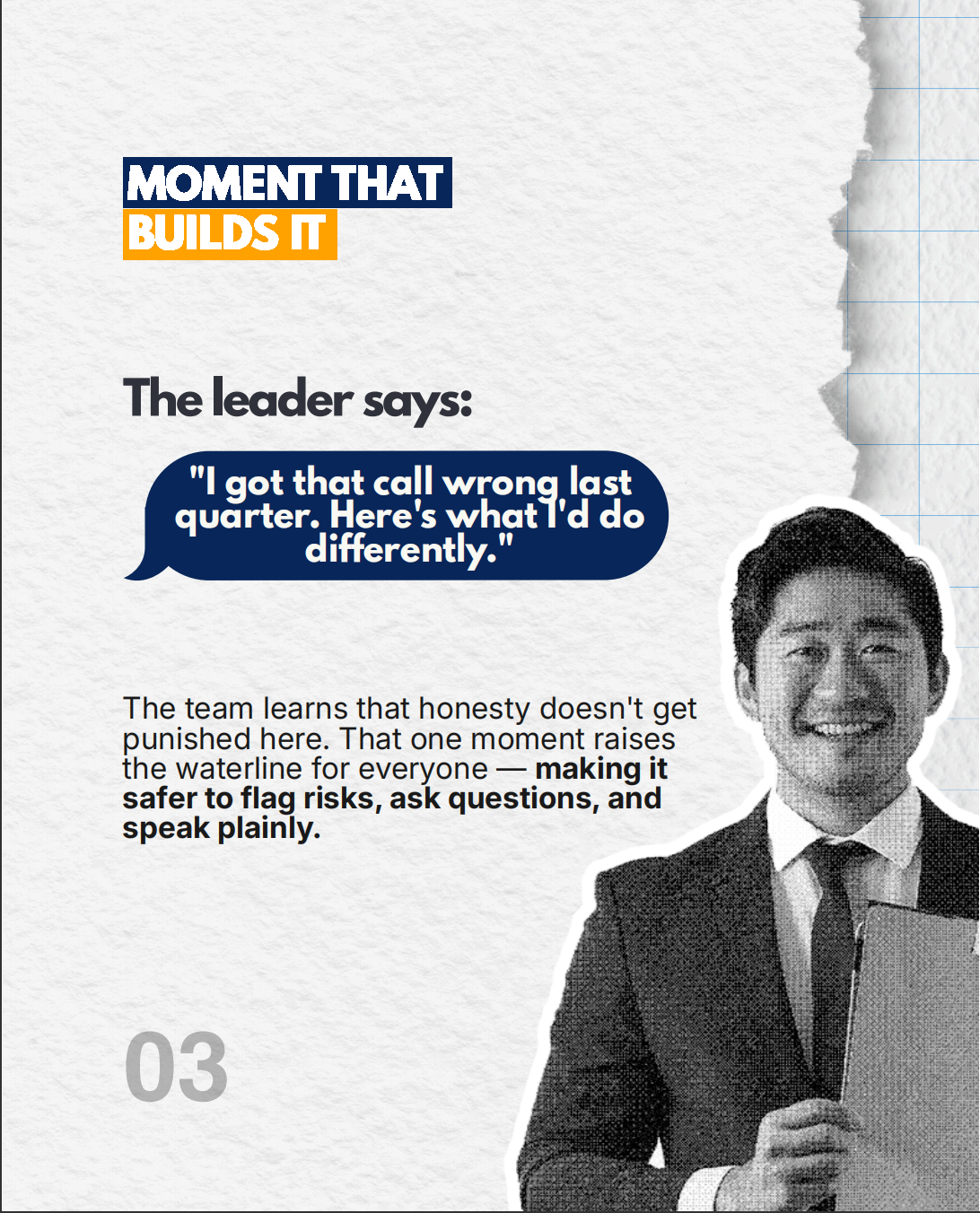
When someone raises a concern and the manager immediately dismisses it, others notice.
When someone makes a mistake and the manager responds constructively, others notice that too.
The team is learning from these moments, even when the manager does not realize it.
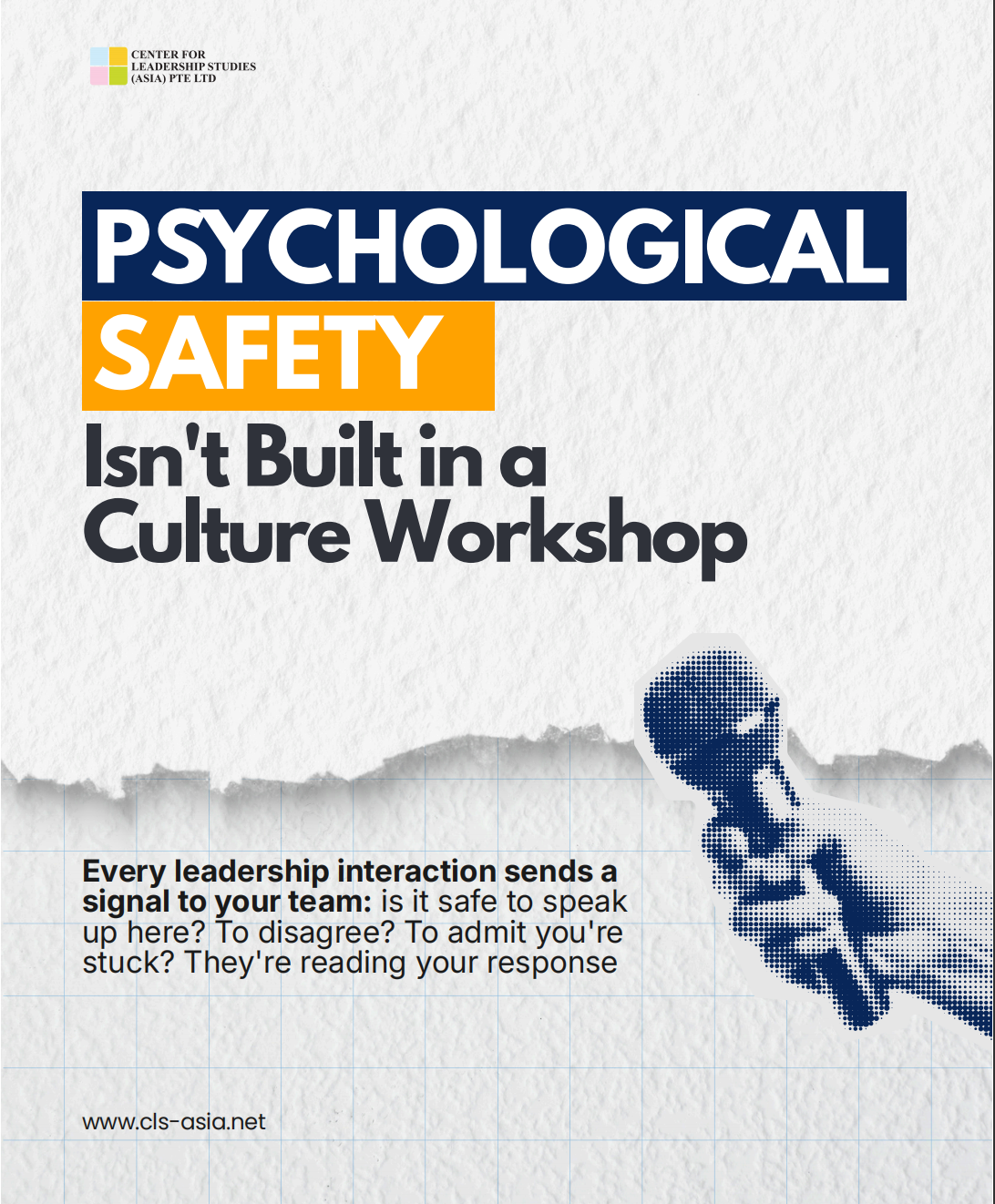
Every leadership interaction sends a signal about whether it is safe to speak up, disagree, or admit difficulty. The response is experienced not only by the individual, but witnessed by the wider team as well.
Over time, these accumulated signals form the bedrock of Team Trust. Trust is not built on sweeping policy statements, but on the predictable, day-to-day vulnerability demonstrated across all levels of leadership.
This is why one conversation can have a much wider effect than expected.
A manager may think they are addressing one employee. The team may be learning how the organization handles honesty.
High Standards and Open Support Go Hand in Hand
For managers, this is an important distinction.
Fostering openness does not mean avoiding difficult conversations. It does not mean accepting poor performance, removing accountability, or allowing every employee to make decisions without guidance.
A psychologically safe team can still have demanding targets and clear expectations.
The difference is in how leaders respond when performance falls short.
Employee Engagement Is Part of the Open Communication
What Leaders Can Do Differently
Building team trust does not require managers to launch another complicated initiative.
It can start with changing a few everyday habits.
Listen before solving.
When an employee raises a problem, resist the immediate urge to provide an answer. Understand the situation first.
Separate the person from the task.
Someone can be highly capable overall and still need direction on a particular responsibility.
Make it possible to raise problems early.
If employees only feel comfortable speaking once they have a complete solution, managers may hear about problems too late.
Respond consistently to mistakes.
Accountability is still necessary, but the response should also help the employee understand what happened and what needs to change
Ask for different perspectives.
A meeting where everyone agrees may be productive, but it may also mean that people are choosing not to challenge the discussion.
Adapt the level of support.
Some employees need clear direction. Others need coaching, encouragement, or greater autonomy. Treating everyone the same is not always fair or effective.
These practices are particularly important for managers who have recently been promoted, inherited a new team, or are leading through organizational change.
People need time to understand how a new leader operates.
The manager’s words matter, but their repeated behavior matters more.
When leadership behavior consistently models understanding over blame, team members feel empowered to engage in open communication. They begin sharing critical updates, constructive feedback, and creative ideas without fear of negative repercussions.
The Real Test Happens Before the Problem Becomes Serious
Daniel’s 4:47 PM message was not just about a missed deadline. It raised a more important question: Why did the concern reach him so late?
If employees feel safe raising problems early, managers have more time to respond. If they can admit when they are stuck, leaders can provide the right support earlier. If they can disagree or ask questions without fear, risks are more likely to be addressed before they become bigger problems.
Psychological safety is not about avoiding accountability. It is about creating an environment where people can be honest about problems and still be responsible for solving them.
That is why it is built through everyday leadership, not a single workshop. Managers shape it through how they listen, respond, give direction, and adapt their approach to what each person and situation requires. This is also where the principles of Situational Leadership® become practical.
The real measure is simple: When employees have something difficult to say, do they feel safe enough to say it early?
For Daniel, the answer will be shaped by what he does next.
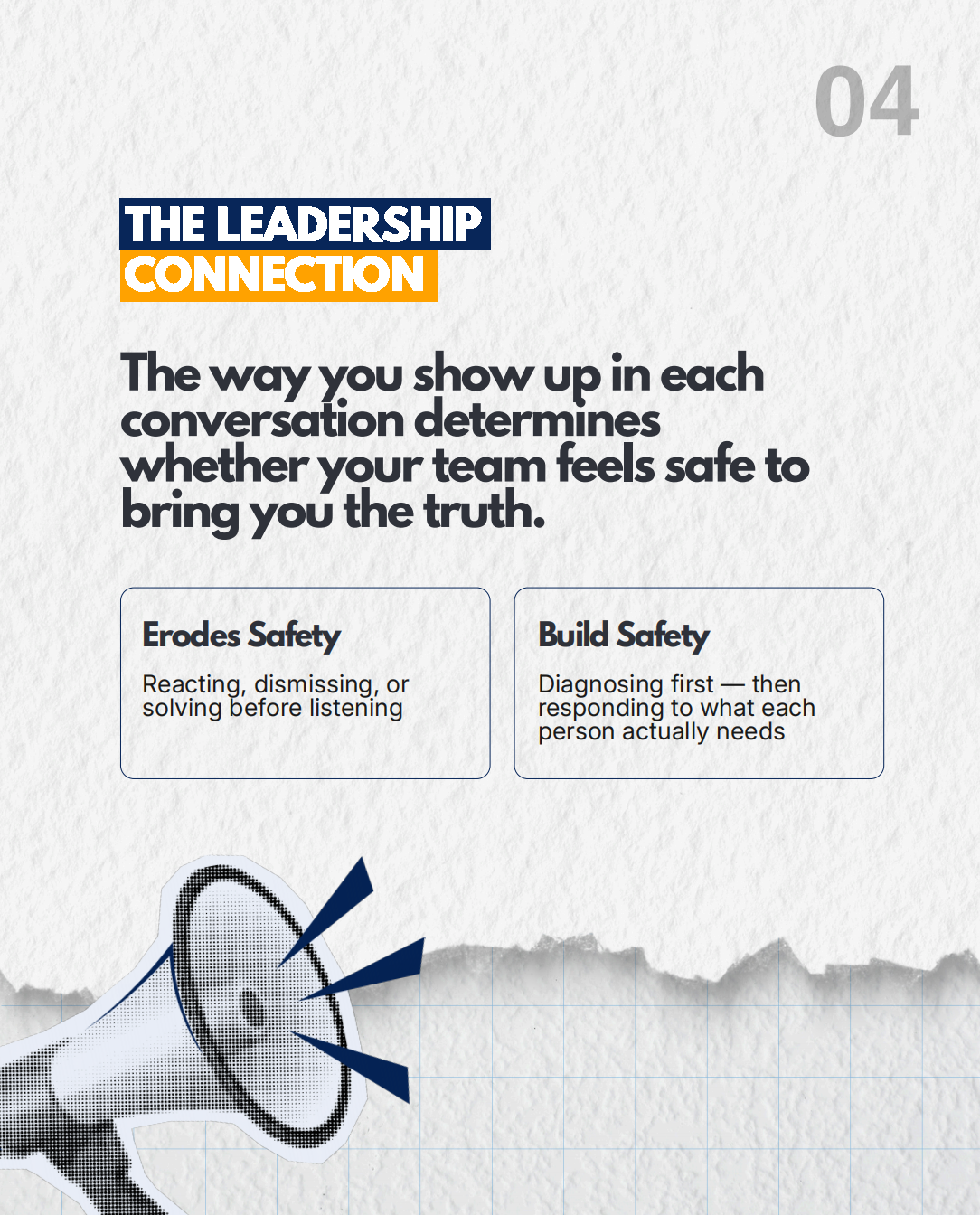
Ultimately, psychological safety is not built through grand announcements or one-off workshops. It is forged in the quiet, everyday moments the way a leader pauses before reacting, separates the person from the problem, and chooses curiosity over defensiveness. By diagnosing first and responding to what the team truly needs, leaders can transform vulnerability from a risk into their greatest operational strength.
Psychological Safety Isn’t Built In A Culture Workshop
Building a culture of psychological safety begins with the daily choices leaders make to encourage open communication and foster trust within their teams. The Center for Leadership Studies (Asia) helps organizations across the region empower managers to create supportive environments where employees feel safe to speak up, share ideas, and address challenges together. To learn how its leadership development and Situational Leadership® programs can build trust and strengthen team dynamics, reach out to the Center for Leadership Studies (Asia). Interested in joining the upcoming public workshop or organizing a private in-company workshop in the region, visit cls-asia.net or speak with the team on WhatsApp at +65 9134 8448.